

Last Updated: March 6, 2026
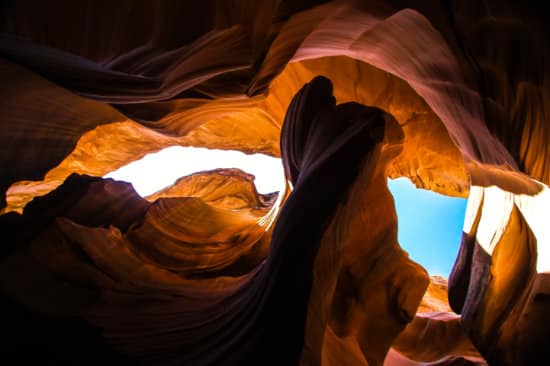
Antelope Canyon is one of the most famous slot canyons in the world, known for its smooth sandstone walls, glowing colors, and dramatic beams of sunlight. Located near Page, Arizona, the canyon attracts visitors from around the globe who come to experience its unique natural beauty.
But many travelers wonder about its unusual name. Why is Antelope Canyon called Antelope Canyon?
The name comes from the large herds of pronghorn antelope that once roamed the area surrounding the canyon many years ago.
Short Answer
Antelope Canyon got its name because herds of pronghorn antelope used to live and graze in the area near the canyon. Early Navajo residents and settlers often saw these animals moving across the desert landscape, which eventually led to the canyon being called Antelope Canyon.
The Navajo name for the canyon is Tsé bighánílíní, which means “the place where water runs through rocks.”
Long Answer
Before the region became a popular travel destination, the desert landscape around present-day Page, Arizona, was home to wildlife including pronghorn antelope.
These animals are native to the American Southwest and are known for their speed and ability to survive in dry desert environments.
Historically, herds of antelope were commonly seen in the open desert and plateaus surrounding the canyon. As a result, people began referring to the area as Antelope Canyon.
Important facts about the name include:
- The canyon was named after pronghorn antelope, which are native to the region
- Early Navajo residents and local explorers often saw antelope near the canyon
- The English name developed as the area became more widely known to outsiders
- The traditional Navajo name reflects the canyon’s geological formation from water
Over time, the English name became the most widely used for travelers and maps.
The Navajo Name for Antelope Canyon
While “Antelope Canyon” is the commonly used English name, the canyon also has an important name in the Navajo language.
The Navajo people call the canyon:
Tsé bighánílíní
This name roughly translates to:
“The place where water runs through rocks.”
This name reflects the natural process that created the canyon.
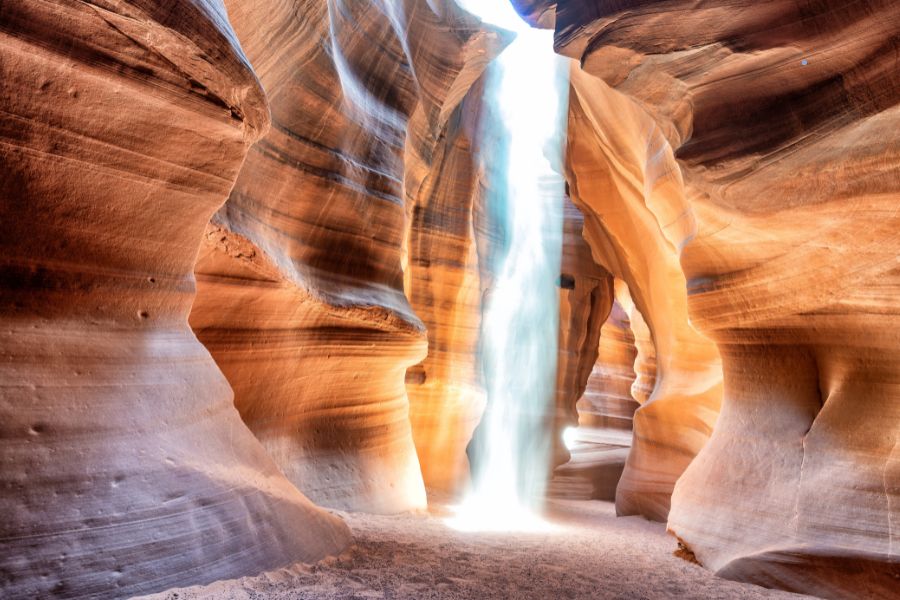
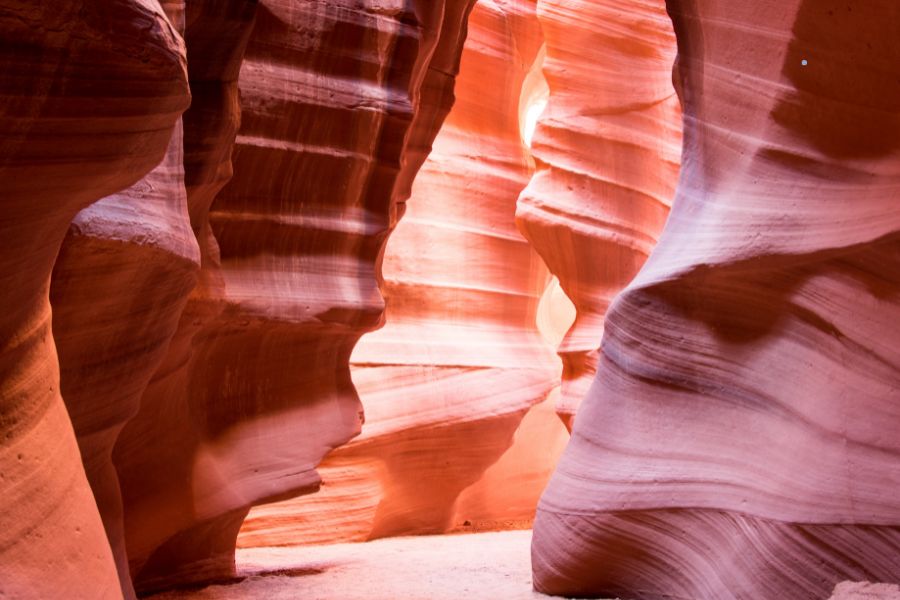
Over thousands of years, flash floods flowing through the desert carved the narrow sandstone passageways, creating the smooth curves and flowing shapes seen today.
The Navajo name highlights the canyon’s connection to water and natural forces, rather than wildlife.
The Two Main Sections of Antelope Canyon
Today, Antelope Canyon is divided into two primary sections that visitors explore on guided tours.
These sections are:
Upper Antelope Canyon
- The most famous and widely photographed section
- Known for its dramatic light beams shining down from above
- Features smooth, flowing sandstone walls
Lower Antelope Canyon
- Slightly narrower and more winding
- Includes staircases and ladders that descend into the canyon
- Offers unique rock formations and dramatic curves
Both sections are located on Navajo Nation land and require visitors to enter with authorized guides.
Why Antelope Canyon Became So Famous
Although the canyon has existed for thousands of years, it only became widely known to travelers and photographers in recent decades.
Its popularity grew due to:
- Stunning photographs of sunlight beams inside the canyon
- The canyon’s glowing orange and red sandstone walls
- Its relatively accessible location near Page, Arizona
Today, Antelope Canyon is one of the most photographed slot canyons in the world.
Visitors come to experience the canyon’s narrow corridors, swirling rock formations, and dramatic lighting conditions.
Many travelers explore the canyon through organized trips like an Antelope Canyon tour from Las Vegas, which allows visitors to see the canyon along with other nearby natural landmarks.
Wildlife in the Area Today
Although large herds of antelope are less commonly seen near the canyon today, wildlife still exists throughout the surrounding desert landscape.
Animals that live in the region include:
- Pronghorn antelope
- Desert foxes
- Coyotes
- Lizards and desert reptiles
- Birds of prey such as hawks and eagles
The open desert environment and rocky plateaus still provide suitable habitats for many of these species.
Bottom Line
So, why is Antelope Canyon called Antelope Canyon?
The canyon received its name because pronghorn antelope once roamed the surrounding desert in large numbers, and early observers began referring to the area by the animals commonly seen there.
However, the canyon’s Navajo name, Tsé bighánílíní, reflects a deeper meaning tied to nature. It translates to “the place where water runs through rocks,” highlighting the flash floods that carved the canyon’s famous sandstone formations.
Today, Antelope Canyon remains one of the most remarkable natural landscapes in the American Southwest, attracting visitors from around the world who want to experience its unique beauty and geological history.