

Last Updated: March 6, 2026
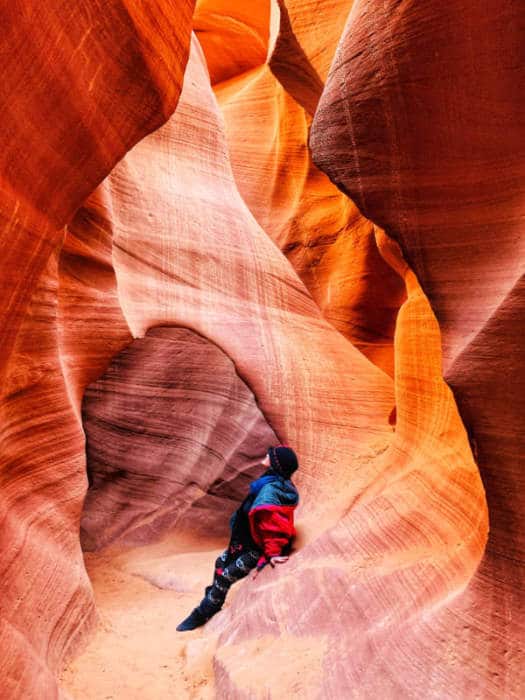
Antelope Canyon is one of the most famous slot canyons in the world, known for its flowing sandstone walls, vibrant colors, and dramatic light beams. Located near Page, Arizona, it attracts visitors from around the globe who want to walk through its narrow passages and photograph its unique formations.
But many travelers are surprised to learn that Antelope Canyon is not part of a U.S. national park. Instead, it sits on Navajo Nation land, and all visitors must enter the canyon with a licensed Navajo guide.
This raises a common question: why is Antelope Canyon on Navajo land?
The answer lies in the region’s history and the long-standing homeland of the Navajo (Diné) people, who have lived across this part of the American Southwest for centuries.
Short Answer
Antelope Canyon is on Navajo land because it lies within the Navajo Nation, the largest Native American reservation in the United States. The canyon is located in northern Arizona on land that has historically belonged to the Navajo people, who manage and protect the area today.
Because of this, the canyon is operated as part of Navajo Nation Parks and Recreation, and visitors are required to enter with authorized Navajo guides.
Long Answer
Antelope Canyon sits inside the boundaries of the Navajo Nation, a sovereign Native American territory that spans parts of Arizona, Utah, and New Mexico.
The Navajo Nation covers more than 27,000 square miles, making it the largest Native American reservation in the United States.
Important facts about the Navajo Nation include:
- It covers parts of three U.S. states
- It is home to over 300,000 Navajo citizens
- It operates its own government, laws, and park system
- It protects many natural landmarks including Antelope Canyon and Monument Valley
Because Antelope Canyon lies within this territory, the Navajo Nation controls access to the canyon and manages tourism there.
The Cultural Importance of Antelope Canyon
Antelope Canyon is not just a beautiful natural attraction. For the Navajo people, the canyon is part of their traditional homeland and cultural landscape.
The Navajo name for Antelope Canyon is Tsé bighánílíní, which roughly translates to “the place where water runs through rocks.”
This name reflects how the canyon formed through flash floods that carved the sandstone over thousands of years.
In Navajo culture, the canyon is respected as part of the natural world and the land that sustains the Diné people.
Because of this cultural connection, the Navajo Nation maintains authority over how the canyon is used and visited.
Why Guided Tours Are Required
Unlike national parks where visitors can explore freely, Antelope Canyon requires guided tours led by Navajo guides.
This rule exists for several important reasons.
Guided access helps:
- Protect the canyon’s fragile sandstone formations
- Ensure visitor safety during potential flash floods
- Preserve the canyon’s cultural and natural significance
- Provide economic opportunities for Navajo communities
Local Navajo guides share stories about the canyon’s geology, history, and cultural importance while leading visitors through the narrow passages.
This system also helps manage tourism while protecting the canyon from damage.
How Tourism Supports the Navajo Nation
Tourism plays a major role in the local economy around Antelope Canyon.
Because the canyon is located on Navajo land, tourism revenue directly benefits Navajo businesses and communities.
Visitors often contribute to the local economy through:
- Guided canyon tours
- Local Navajo tour companies
- Navajo-owned transportation services
- Arts, crafts, and cultural experiences
Many travelers visit through organized trips such as an Antelope Canyon tour from Las Vegas, which include transportation and guided access to the canyon while supporting Navajo-operated tour services.
These tours help ensure that tourism benefits the communities that live in and protect this region.
Antelope Canyon Is Part of a Larger Navajo Landscape
Antelope Canyon is just one of many natural landmarks located within the Navajo Nation.
Other famous landscapes in Navajo territory include:
- Monument Valley
- Canyon de Chelly
- Horseshoe Bend (near Navajo land)
- Lake Powell and Glen Canyon areas
These landscapes are part of the Navajo people’s traditional homeland and remain important culturally and historically.
The Navajo Nation continues to manage many of these locations through its own park system.
Bottom Line
So, why is Antelope Canyon on Navajo land?
Antelope Canyon lies within the boundaries of the Navajo Nation, the largest Native American reservation in the United States. The canyon is part of the Navajo people’s traditional homeland and is managed today by Navajo Nation Parks and Recreation.
Because of this, visitors must explore the canyon with authorized Navajo guides, which helps protect the canyon while supporting local Navajo communities.
This unique system allows travelers to experience one of the most beautiful slot canyons in the world while respecting the culture and land of the Diné people who have lived there for generations.