

Last Updated: March 6, 2026
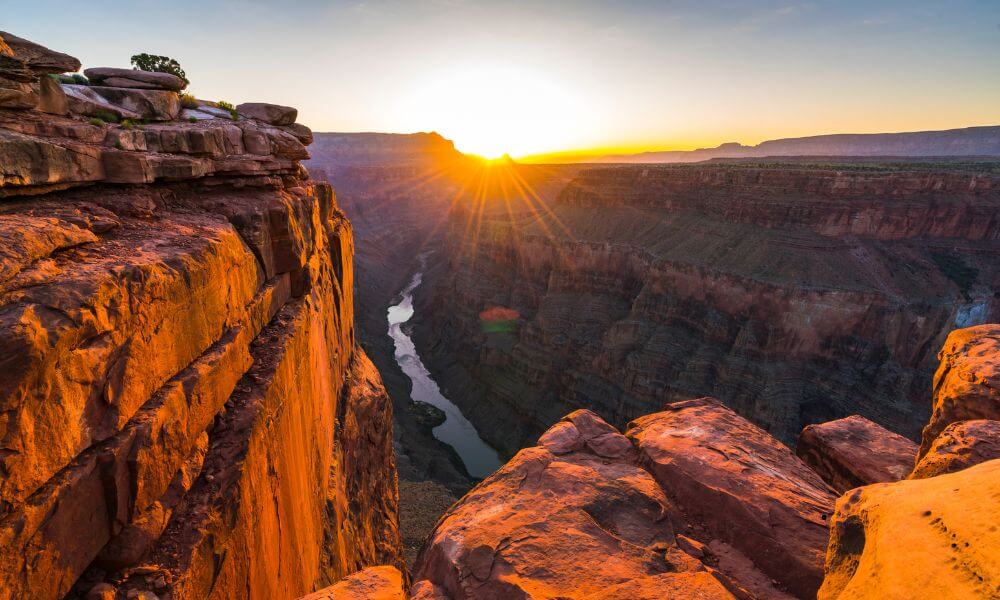
Few natural sights are as mesmerizing as watching the Grand Canyon at sunset. As the sun drops toward the horizon, the canyon’s cliffs shift through brilliant shades of gold, orange, red, purple, and deep shadow. Visitors often describe it as one of the most beautiful moments they experience in the American Southwest.
This dramatic transformation leads many people to ask: why does the Grand Canyon change colors at sunset?
The answer lies in a combination of sunlight angle, atmospheric scattering, and the canyon’s mineral-rich rock layers.
Short Answer
The Grand Canyon changes colors at sunset because the angle of sunlight becomes lower, causing light to scatter differently through the atmosphere. As the sunlight passes through more air, shorter blue wavelengths scatter away while longer red and orange wavelengths dominate, illuminating the canyon’s rock layers in warm colors.
At the same time, the canyon’s iron-rich rocks naturally reflect red, orange, and gold tones, making the sunset effect even more dramatic.
Long Answer
The canyon’s famous sunset colors result from both physics and geology working together.
As the sun sinks toward the horizon, sunlight must travel through more of Earth’s atmosphere before reaching the canyon. This causes a phenomenon known as Rayleigh scattering, where shorter wavelengths like blue light scatter away.
What remains are longer wavelengths such as red, orange, and yellow, which cast a warm glow across the canyon walls.
Several factors contribute to the dramatic color changes visitors see:
- The low angle of the sun at sunset
- Scattering of blue light in the atmosphere
- Minerals in the canyon’s rock layers reflecting warm tones
- Long shadows cast by cliffs, mesas, and buttes
Because the Grand Canyon has such enormous depth and layered rock formations, these effects become especially vivid.
The Role of the Canyon’s Rock Layers
Another major reason the Grand Canyon glows at sunset is the composition of its rock layers.
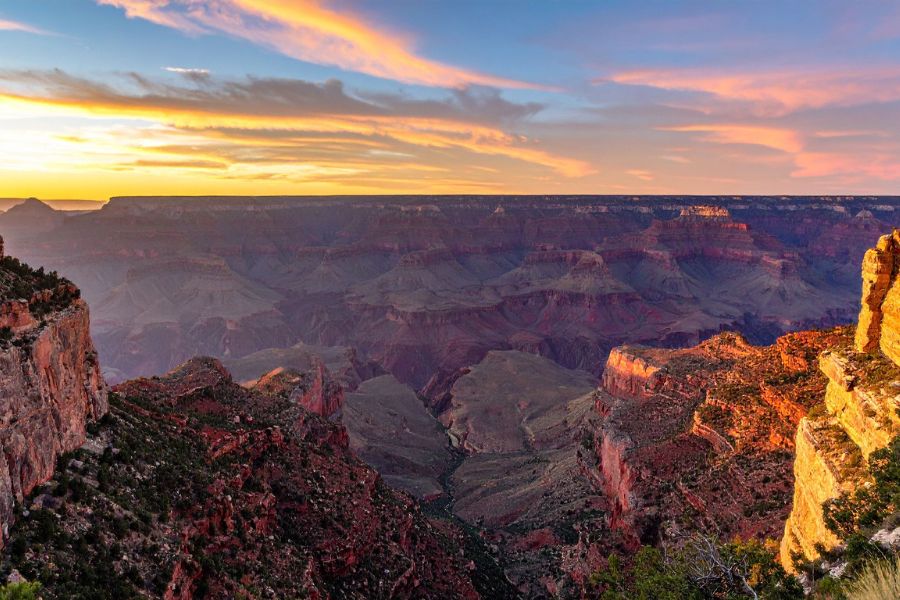
Many of the canyon’s formations contain iron oxide, which naturally gives rocks their red and orange appearance. These minerals become even more vibrant when illuminated by the warm tones of sunset light.
Some of the canyon’s most colorful rock formations include:
- Redwall Limestone
- Supai Group sandstones
- Coconino Sandstone cliffs
- Bright Angel Shale layers
These formations reflect sunlight differently depending on the angle and intensity of the light.
During midday, the canyon often appears lighter and more neutral in color. But as the sun lowers, the rock layers absorb and reflect warm hues, creating the glowing effect visitors love.
Why Shadows Make the Colors Even Stronger
Sunset also creates powerful contrasts between light and shadow across the canyon landscape.
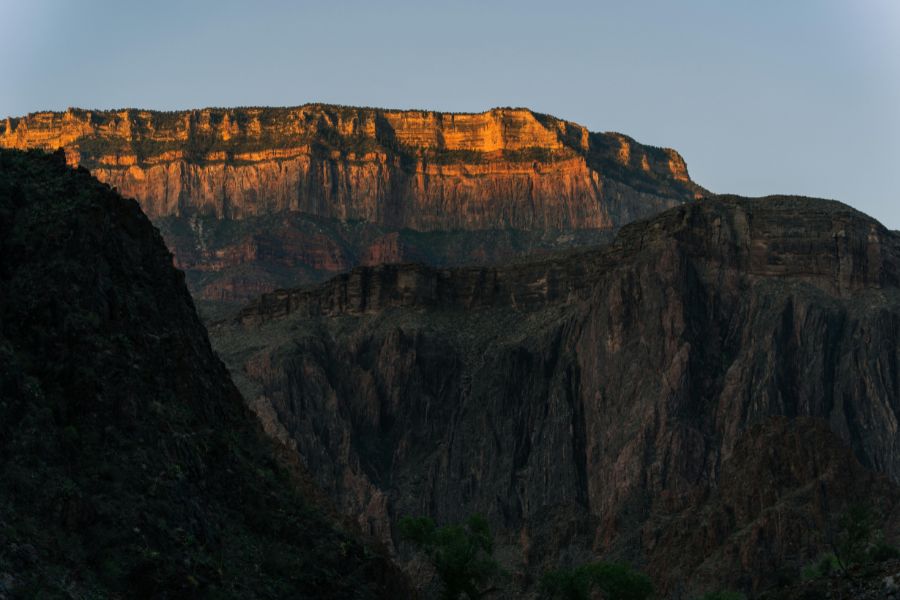
Because the Grand Canyon is so deep and filled with towering cliffs, the low sunlight creates long shadows that stretch across the canyon floor.
These shadows add dramatic contrast by:
- Darkening parts of the canyon while others glow in sunlight
- Highlighting ridges, buttes, and rock layers
- Creating depth and texture across the landscape
This contrast is one reason sunset photos often look so striking. The canyon appears almost three-dimensional, with glowing rock faces emerging from deep shadow.
Why Every Sunset Looks Different
Another fascinating aspect of Grand Canyon sunsets is that no two sunsets ever look exactly the same.
Several environmental factors influence the colors you see each evening.
These include:
- Dust and moisture in the atmosphere
- Cloud cover and weather patterns
- Seasonal changes in sunlight angle
- Air clarity after storms
For example, a dusty desert atmosphere can intensify reds and oranges, while thin clouds may reflect sunlight and create pink or purple tones.
Because of these constantly changing conditions, the canyon can appear completely different from one evening to the next.
Best Places to Watch Sunset at the Grand Canyon
Sunset is widely considered one of the best times of day to experience the Grand Canyon.
Several viewpoints on the South Rim are especially popular for sunset views because they offer wide panoramic perspectives of the canyon.
Popular sunset viewpoints include:
- Hopi Point
- Yavapai Point
- Mather Point
- Desert View Watchtower
From these locations, visitors can watch sunlight slowly move across the canyon walls before the cliffs fade into purple and blue twilight.
Many travelers also experience these unforgettable views through Grand Canyon tours from Las Vegas.
Seeing the canyon change colors in real time is something photographs rarely capture fully.
Bottom Line
So, why does the Grand Canyon change colors at sunset?
The canyon’s famous sunset colors occur because low-angle sunlight filters through more of the atmosphere, scattering blue light and allowing red, orange, and golden wavelengths to dominate. When this warm light hits the canyon’s iron-rich rock layers, the cliffs glow with dramatic color.
Combined with deep shadows and the canyon’s immense scale, this natural lighting effect creates one of the most spectacular sunset views in the world.
It’s no surprise that watching the Grand Canyon change colors at sunset remains one of the most unforgettable experiences for visitors to the American Southwest.