

Last Updated: March 6, 2026
The Hoover Dam is one of the most iconic engineering structures in the United States. Standing across the Colorado River between Nevada and Arizona, it holds back the massive waters of Lake Mead while providing electricity and water to millions of people in the Southwest.
Because of its size and importance, many visitors ask a dramatic question: what would happen if Hoover Dam broke?
While the scenario is extremely unlikely, understanding what could happen helps explain just how important the dam is for the region.
Short Answer
If Hoover Dam were to suddenly fail, a massive wall of water from Lake Mead would surge down the Colorado River, flooding areas downstream and damaging infrastructure along the river corridor.
However, modern engineering, constant monitoring, and the dam’s extremely strong construction make such a failure extraordinarily unlikely.
Long Answer
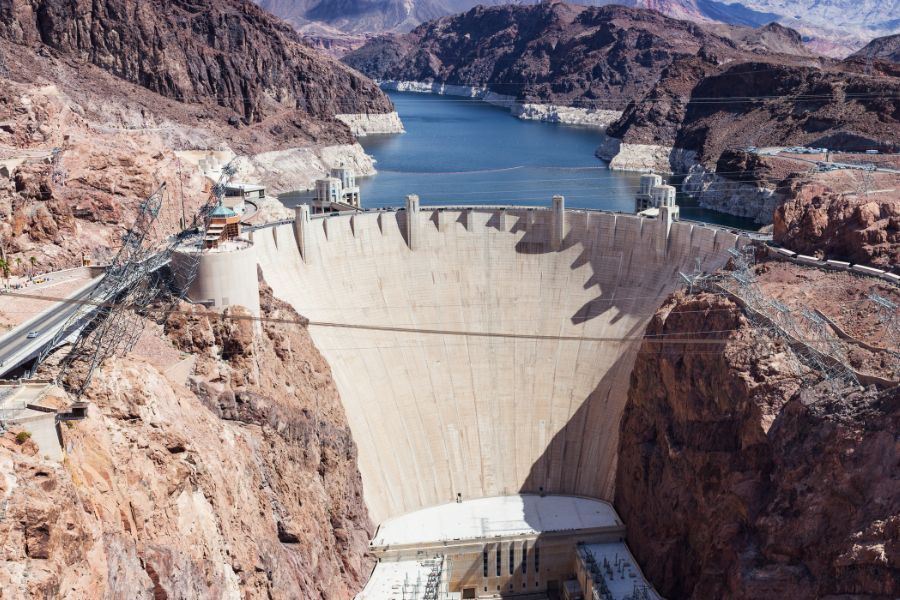
The Hoover Dam is designed to withstand enormous pressure from Lake Mead. It is a concrete arch-gravity dam, meaning its curved shape transfers water pressure into the canyon walls.
At 726 feet tall and over 660 feet thick at its base, the dam contains millions of cubic yards of concrete and is considered one of the strongest dams ever built.
Still, in a hypothetical scenario where the dam failed suddenly, the immediate result would be a massive flood wave moving downstream along the Colorado River.
Possible effects would include:
- A huge surge of water rushing downstream through Black Canyon
- Severe flooding along parts of the lower Colorado River
- Damage to downstream infrastructure and dams
- Major disruption to water and power supplies in the Southwest
The speed and impact of the flood would depend on how the failure occurred.
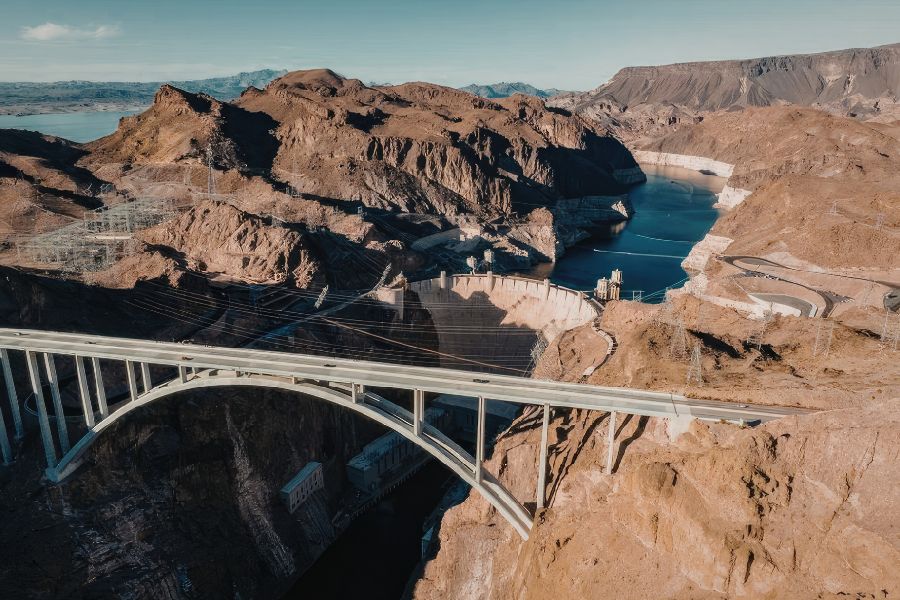
How Much Water Would Be Released
Behind Hoover Dam sits Lake Mead, the largest reservoir in the United States by capacity.
At full capacity, Lake Mead can store around 28–29 million acre-feet of water.
If the dam were suddenly destroyed, a massive portion of this water could surge downstream.
This could create:
- A powerful flood wave moving through the Colorado River canyon
- Rising water levels along the river downstream
- Large amounts of water flowing toward Arizona, California, and Mexico
However, the canyon landscape would slow and channel much of the floodwater.
What Would Happen to Downstream Dams
The Colorado River contains several other major dams downstream from Hoover Dam.
One of the closest is Davis Dam, located about 70 miles downstream.
In a worst-case scenario, the surge of water from Hoover Dam could potentially overwhelm downstream dams, depending on their capacity and the size of the flood wave.
Key dams downstream include:
- Davis Dam
- Parker Dam
- Imperial Dam
Each of these structures would play a role in absorbing or managing some of the floodwater.
Impact on Cities and Water Supply
Hoover Dam plays a critical role in the water and energy systems of the Southwest.
If the dam failed, several major systems would be affected.
Potential impacts could include:
- Loss of hydroelectric power generated by the dam
- Major disruptions to water deliveries from Lake Mead
- Water supply issues for cities such as Las Vegas, Phoenix, and Los Angeles
- Long-term challenges for agriculture in the Colorado River Basin
However, modern emergency planning and infrastructure redundancy would help reduce long-term impacts.
Why a Hoover Dam Failure Is Extremely Unlikely
Although the scenario sounds dramatic, Hoover Dam is considered one of the safest large dams in the world.
Several factors make a catastrophic failure extremely unlikely:
- The dam is built from massive reinforced concrete
- Its arch design distributes pressure into the canyon walls
- Engineers continuously monitor the dam’s structural stability
- Regular inspections and maintenance ensure long-term safety
In addition, the dam was designed to handle extreme events such as:
- Major floods
- Earthquakes
- Long-term water pressure from Lake Mead
Because of these safeguards, experts consider Hoover Dam structurally very secure.
Why Hoover Dam Still Fascinates Visitors
Even though the dam is extremely safe, its enormous scale naturally sparks curiosity about how it works and what might happen in extreme situations.
Today, Hoover Dam remains both a critical piece of infrastructure and a major tourist attraction.
Visitors can walk across the top of the dam, explore the visitor center, and see the massive turbines that generate electricity inside the structure.
Many travelers learn about the dam’s design and safety features during a Hoover Dam tour from Las Vegas, where guides explain how engineers built one of the most impressive infrastructure projects in American history.
Seeing the dam in person helps visitors understand just how massive and resilient it truly is.
Bottom Line
So, what would happen if Hoover Dam broke?
In theory, a failure could release a massive surge of water from Lake Mead into the Colorado River, flooding downstream areas and disrupting water and power systems across the Southwest.
However, Hoover Dam is one of the strongest and most carefully monitored dams ever built, and engineers consider a catastrophic failure extremely unlikely.
Nearly a century after its construction, the Hoover Dam continues to safely control the Colorado River while providing water, electricity, and stability to millions of people across the region.