

Last Updated: March 6, 2026
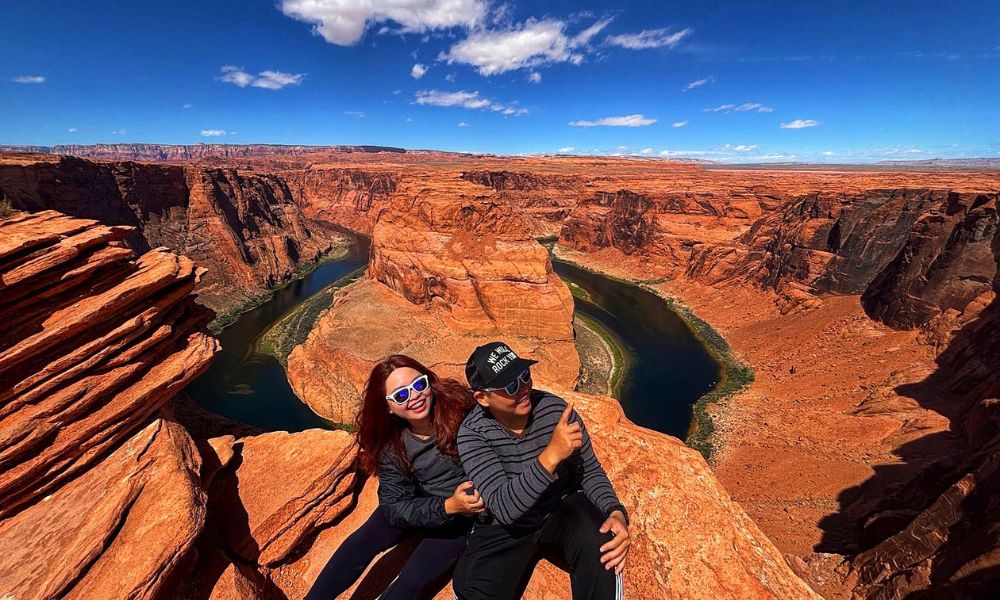
Horseshoe Bend is one of the most photographed natural landmarks in the American Southwest. Located near Page, Arizona, this dramatic curve in the Colorado River forms a nearly perfect horseshoe shape surrounded by towering sandstone cliffs.
Visitors standing at the overlook often wonder: why is Horseshoe Bend shaped like a horseshoe?
The answer lies in millions of years of river erosion, geology, and the slow movement of the Colorado River across the desert landscape.
Short Answer
Horseshoe Bend is shaped like a horseshoe because the Colorado River gradually carved a large meander, or curve, through the sandstone rock over millions of years. As the river slowly eroded the canyon walls, the curve became deeper and more pronounced, eventually forming the iconic horseshoe-shaped bend seen today.
Long Answer
Rivers naturally form curves called meanders as they flow across landscapes. These curves develop because water moves faster on the outside edge of a bend and slower on the inside edge.
Over time, this difference in speed causes erosion and sediment buildup.
At Horseshoe Bend, the process works like this:
- The outside of the curve erodes faster, cutting deeper into the rock
- The inside of the curve collects sediment, reinforcing the bend
- Over thousands to millions of years, the curve becomes larger and more dramatic
Eventually, the Colorado River carved a nearly circular bend through the sandstone plateau, creating the famous horseshoe shape.
The Role of the Colorado River
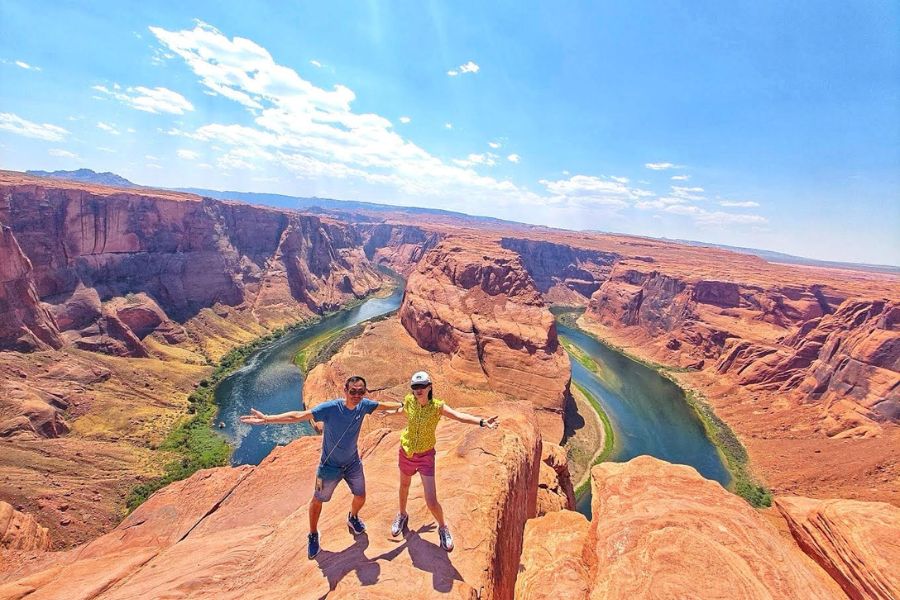
The Colorado River is the primary force responsible for shaping Horseshoe Bend.
This powerful river stretches more than 1,400 miles from the Rocky Mountains to Mexico and has carved many famous landscapes in the Southwest, including:
- The Grand Canyon
- Glen Canyon
- Numerous desert canyons and rock formations
At Horseshoe Bend, the river cut through Navajo Sandstone, a rock formation that formed from ancient desert sand dunes around 190 million years ago.
Because sandstone erodes relatively easily compared to harder rock, the river was able to slowly carve the deep canyon and tight curve seen today.
Why the Bend Is So Dramatic
Many rivers form curves, but Horseshoe Bend is unusually tight and symmetrical.
Several geological factors helped create this distinctive shape.
These include:
- A relatively flat plateau surrounding the river
- Long periods of slow erosion over millions of years
- The Colorado River cutting downward into the rock rather than sideways
As the river eroded downward into the plateau, it preserved the original curved path of the river instead of flattening it out.
This process created what geologists call an entrenched meander, where a river keeps its curved shape even as it cuts deep into the landscape.
How Deep Horseshoe Bend Is
The cliffs surrounding Horseshoe Bend are extremely steep and dramatic.
From the overlook to the Colorado River below, the drop is about:
- 1,000 feet (305 meters)
This massive vertical drop adds to the visual impact of the horseshoe shape, especially when viewed from above.
The sandstone cliffs surrounding the river create one of the most recognizable viewpoints in the American Southwest.
Why Horseshoe Bend Became So Famous
Although Horseshoe Bend has existed for millions of years, it became widely known to travelers only in recent decades.
Its popularity grew because of:
- Social media photography showcasing the dramatic curve
- Its location near Page, Arizona
- Easy access via a short hiking trail to the overlook
Today, it is one of the most visited natural viewpoints in the region.
Visitors often combine their trip to Horseshoe Bend with nearby attractions such as Antelope Canyon and Lake Powell.
Many travelers explore both landmarks through a Antelope Canyon and Horseshoe Bend Tour, which allows visitors to see two of the most famous landscapes in northern Arizona in one trip.
Visiting Horseshoe Bend
Reaching the Horseshoe Bend overlook requires a relatively short hike.
The trail from the parking area to the viewpoint is:
- About 1.5 miles round trip
- Mostly flat with some sandy sections
- Accessible to most visitors with basic fitness
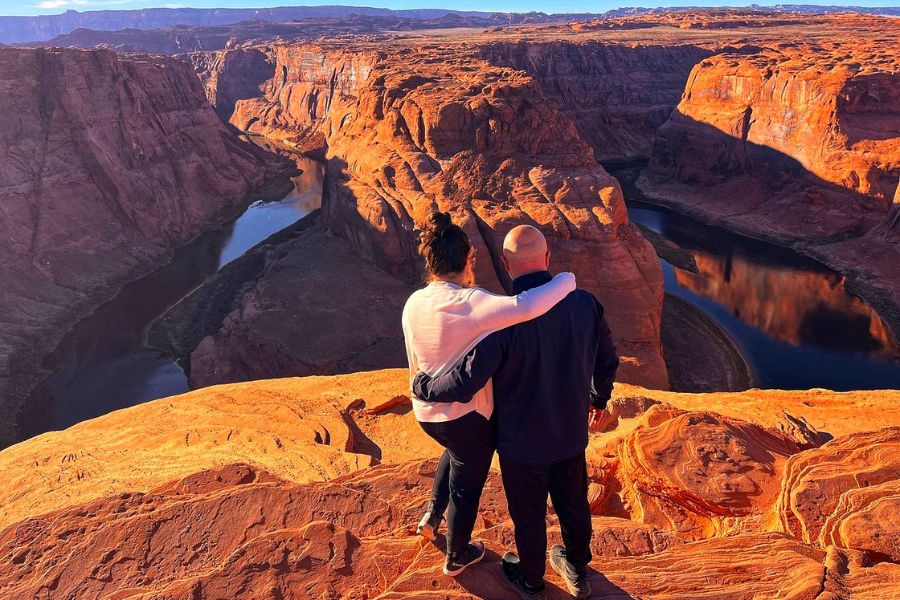
Once at the overlook, visitors can see the Colorado River making its dramatic curve around the sandstone cliffs.
Sunrise and sunset are especially popular times to visit because the warm desert light enhances the colors of the rock formations.
Bottom Line
So, why is Horseshoe Bend shaped like a horseshoe?
The famous curve formed because the Colorado River gradually carved a deep meander into the Navajo sandstone plateau over millions of years. As the river eroded the rock and cut deeper into the canyon, the original bend became preserved in the landscape, creating the dramatic horseshoe shape visible today.
Combined with the towering 1,000-foot cliffs and the deep green Colorado River below, Horseshoe Bend remains one of the most breathtaking and recognizable natural landmarks in the American Southwest.