

Last Updated: March 6, 2026
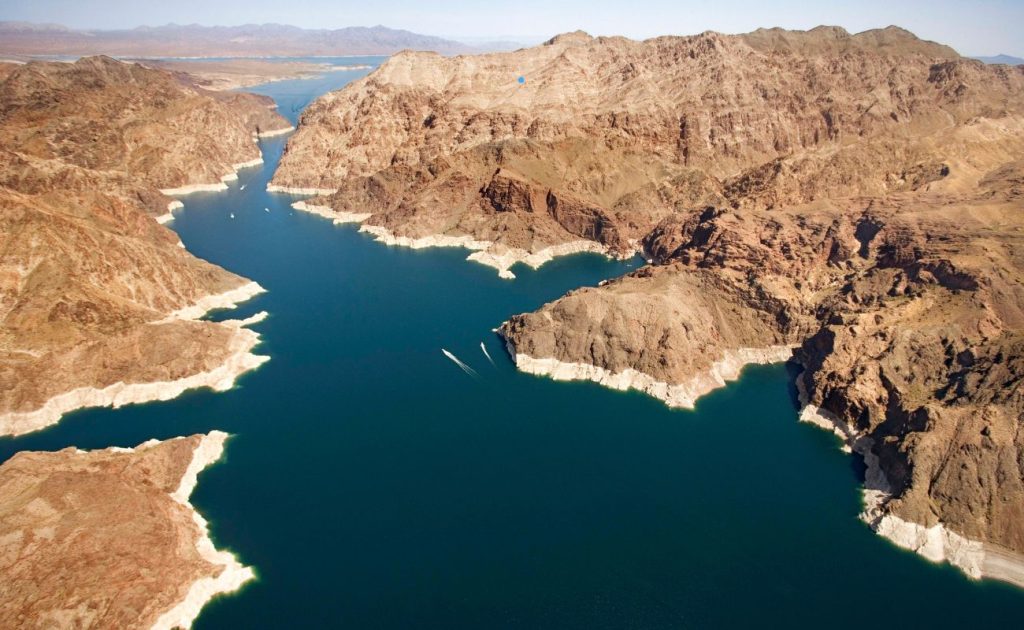
Lake Mead is the largest reservoir in the United States and one of the most important water sources in the American Southwest. Created by the Hoover Dam on the Colorado River, the lake supplies water to millions of people in cities like Las Vegas, Phoenix, and Los Angeles.
In recent years, however, the reservoir has become a symbol of the region’s growing water crisis. This leads many people to ask: how much water is Lake Mead losing each year?
The answer varies depending on weather conditions and water use, but long-term data shows that the lake has been losing significant amounts of water for more than two decades.
Short Answer
Lake Mead does not lose the same amount of water every year, but over the past two decades it has experienced a major long-term decline. Between 2000 and 2023, the combined water storage in Lake Mead and Lake Powell dropped by about 33.5 million acre-feet, largely due to drought and overuse of the Colorado River.
To put that into perspective, one acre-foot of water equals about 326,000 gallons, enough to supply one to two households for a year.
While some years see temporary recovery due to heavy snowfall or conservation measures, the overall trend shows significant water loss across the Colorado River system.
Long Answer
Lake Mead’s water levels rise and fall depending on several factors, including snowpack in the Rocky Mountains, water demand, drought conditions, and river flow.
However, the long-term pattern since the early 2000s has been a steady decline in storage levels.
Key statistics about the reservoir include:
- Lake Mead can store about 28–29 million acre-feet of water when completely full.
- By the mid-2020s, the lake has often held around one-third of its total capacity.
- The Colorado River system has lost tens of millions of acre-feet of storage since 2000.
These numbers show just how dramatically the reservoir has changed in recent decades.
How Much Water Lake Mead Has Lost Overall
Since the early 2000s, the Colorado River Basin has experienced a severe “megadrought”, reducing the amount of water flowing into Lake Mead.
Between 2000 and 2023, storage in the two main reservoirs—Lake Mead and Lake Powell—declined by about 33.5 million acre-feet.
That amount of water equals:
- More than 10 trillion gallons of water
- Enough water to supply millions of households for decades
- Roughly the equivalent of filling Lake Mead itself once
Although this decline occurred across the entire Colorado River system, Lake Mead has absorbed a large portion of the losses.
Why Lake Mead Is Losing Water
Several major factors contribute to the decline in Lake Mead’s water levels.
1. Long-Term Drought
The American Southwest has experienced a prolonged drought since the early 2000s. Reduced snowpack in the Rocky Mountains means less water flows into the Colorado River each year.
Because the river is Lake Mead’s main water source, lower river flow directly reduces the amount of water entering the reservoir.
2. Climate Change
Rising temperatures across the Southwest increase evaporation from rivers, reservoirs, and soil.
Higher temperatures also reduce mountain snowpack, which historically provided much of the river’s water supply.
These climate trends are expected to reduce river flows even further in the future.
3. High Water Demand
The Colorado River supplies water to more than 40 million people across the western United States.
Major cities and agricultural regions rely heavily on this water system, including:
- Las Vegas
- Phoenix
- Los Angeles
- Large farming areas in Arizona and California
As populations grow, demand for water continues to increase.
4. Evaporation From the Reservoir
Because Lake Mead sits in the hot desert climate of southern Nevada and Arizona, it loses large amounts of water through evaporation every year.
Some estimates suggest that hundreds of thousands of acre-feet of water evaporate annually from the lake’s surface.
Can Lake Mead Recover?
Lake Mead’s water level can rise during years with heavy snowpack in the Rocky Mountains. Strong winter storms increase runoff into the Colorado River, which helps refill the reservoir.
However, experts warn that recent increases are likely temporary improvements rather than a permanent recovery.
Long-term stabilization will likely require:
- Major water conservation efforts
- New Colorado River water agreements between states
- Continued reductions in water use
Without these changes, the reservoir could continue facing significant pressure in the coming decades.
Why Lake Mead’s Water Levels Matter
Lake Mead is not just a recreational lake. It plays a critical role in the entire Southwest.
The reservoir provides:
- Drinking water for millions of people
- Irrigation for large agricultural regions
- Hydroelectric power from Hoover Dam
- Recreation and tourism opportunities
Declining water levels can affect everything from city water supplies to electricity production.
Many visitors learn about this issue while visiting Hoover Dam or Lake Mead through a Hoover Dam tour from Las Vegas, where guides often explain how the Colorado River system supports the entire region.
Bottom Line
So, how much water is Lake Mead losing each year?
The exact amount changes from year to year, but long-term data shows that the Colorado River system has lost more than 33.5 million acre-feet of stored water since 2000, a dramatic decline driven by drought, climate change, and increasing water demand.
Although conservation efforts and occasional wet winters can temporarily slow the decline, Lake Mead remains under significant pressure. Its future will depend on how the Southwest manages water use in the decades ahead.